Showing posts with label Good Avenue. Show all posts

Saturday, April 11, 2026

Google Streetview Reveals Lost Structures of Greater Irvington Area, Part I

      Since 2007, someone has been driving around in a little Google car with a camera on top, photographing streets and alleys around Indianapolis and beyond. Thankfully, Google archives these images and keeps them on their website. During a particularly rainy period, I got on Streetview and "drove" around from within the confines of my little home office. What I found saddened me as dozens of structures have vanished in the nineteen years since Google first arrived. When you see some of the photographs, you will shake your head and wonder how they even survived another day. Others were lost to development or parking lots. A few tragically burned, upending the lives of the families inside. While the core of Irvington is protected by the Indianapolis Preservation Commission, that still does not guarantee that a house or commercial building will survive into the next decade; however, most of the structures below had no protections and no chance to survive. Let's take a journey and see a sample of what is missing.

135 South Arlington Avenue

     The cute cottage located at 135 South Arlington had been on the same lot since the 1890s. A white couple named James and Jennie Milton resided here for decades. After her death in 1916, numerous long-time Black families resided in the home. Thomas and Carrie Handley lived here during the late 1910s and early 1920s. Mr. Handley was a jack of all trades and remodeled the house. They hailed from Kentucky. The Dobsons, Blythes, and Pitts lived here during the 1930s, 40s, and 50s. Harland and Rita Nuckols purchased the property in 1959 and their family remained for decades. Mr. Nuckols worked for International Harvester for many years. Their children attended Howe High School. The Google car captured the image below in 2009. In my mind, I see flowers growing out of that pretty flower box and curtains in those upper dormer windows. Today the site is an empty lot. 

135 South Arlington, Google Streetview, 2009

The Nuckols family was a fixture at 135 South Arlington Avenue for many years. In this montage you can even see Mrs. Nuckols standing on her stoop speaking to some kind of salesman. (images courtesy of Kisa Cunningham via Ancestry.com) 


569 South Arlington Avenue

     Some houses have been flattened for development. That is what happened to the nearly century-old bungalow located at 569 South Arlington Avenue. It had the misfortune of being in the way of a proposed convenience store and gas station. In the early years many tenants rented the property. In 1932 it cost $18 a month to live in the two-bedroom residence. It was never a grand place, but dozens of people built their lives here. 

569 South Arlington Avenue, Google Streetview, 2016

The cute little dog was the subject of this photograph in 1941, but behind the pooch you can see 569 South Arlington Avenue. (courtesy of Helen Hunt) 

5902 Beechwood Avenue

     William Wuest opened his grocery store at 5902 Beechwood Avenue in 1922. Over the years the structure served as a beauty shop and as apartments. By 2010 it was in rough shape. I kept thinking that the building could be saved. Perhaps an antique dealer or chocolatier or a rare book dealer would buy it and turn the fortunes of fate around, but all of that was lost when a teenage-arsonist destroyed the property in the spring of 2010. 

     
5902 Beechwood, Google Streetview, 2009


The grocery store formerly located on the northeast corner of Good and Beechwood Avenues can be seen in this photograph snapped in 1953. Pictured (left to right) Linda Bevis, Debbie St. John, Claudia St. John, Donna Bevis, and Jean Ferling. (photo courtesy of Bill Ferling) 

40-42 South Butler Avenue

     Although this beautiful double sat in the preservation district, it did not survive a disastrous fire. Built in the early 1920s, dozens of families resided in the duplex (I thought it was older!). From 1948 until 1968 John and Mary Flanagan owned and lived in the property. They rented out the other half to family members. This stylish double had both hipped and gabled rooflines. 

40 South Butler Avenue, Google Streetview, 2009

John Flanagan posed with his daughter, Theresa on the day of her First Communion at Our Lady of Lourdes Catholic Church in 1960. Behind them you can see the double formerly located at 40-42 South Butler Avenue. (photo courtesy of the Flanagan family and Paula Schmidt)

501-03 North Emerson Avenue

     The substantial brick commercial building had been on the northeast corner of Emerson Avenue and Michigan Street since at least 1910. Frank Wright and others operated a grocery store at 501 North Emerson for decades. In the 1920s, it was known as Forsyth Pharmacy. Most long-time residents will remember the corner as McShane's Parkway Tavern. Apparently, the St. Patrick Day celebrations here were legendary. It was torn down sometime after 2007. The only saving grace for the loss of this structure is that at least in 2026 it is now the site of beautiful flower and vegetable gardens. 

501-03 North Emerson Avenue, Google Streetview, 2007

McShane's Tavern at 501 North Emerson Avenue in 1962 (photo courtesy of Frank Widner)

5507 Greenfield Avenue

     For years I used to drive by the sweet house with the fieldstone front porch on Greenfield Avenue.  You can imagine how surprised I was to learn that it had been torn down! Built in the late 1890s, the dwelling was home to William M. and Harriett C. Baker, two of the earliest Black residents of Irvington. Mr. Baker worked as a teamster while Mrs. Baker served as a laundress. Her old-fashioned Christmas fruitcake recipe made the Indianapolis Times in 1926. The Bakers lived there until the 1940s. Another long-time Black family, James and Opal Drake, resided here for many years. Mr. Drake served as the Chef for the Holloway House Cafeteria for decades. The couple were very involved at St. Bridget's Catholic Church...also gone! Had their home been three blocks north it would have been protected from demolition. 

5507 Greenfield Avenue, Google Streetview, 2019

James and Opal Drake celebrated their 50th wedding anniversary at the house on December 21, 1974 (Indianapolis Star, December 22, 1974, p. 98) 

5139 East Michigan Street

     The beautiful American foursquare located in the Pleasanton subdivision of Irvington had been on the site since 1924. The immaculate home sadly burned and was demolished in 2017. An ad in 1925 described the property as a "four-bedroom house, close to Pleasant Run Blvd. and Ellenberger Park. One of the best locations east." The price at $10,000 made it one of the more expensive residences in the neighborhood. The Gisler family lived in the house through much of the mid-twentieth century. Various Democratic mayors of Indianapolis appointed Albert H. Gisler to various boards. Today the site is an empty lot.

5139 East Michigan Street, Google Streetview, 2009


In 1947 Mayor Finney appointed Albert Gisler to the Board of Safety for the police and fire departments. His photo appeared in the Indianapolis News on December 3, 1947.


Up Next:  Google Streetview Reveals Lost Structures of Greater Irvington, Part II

Sources:  135 S. Arlington--Polk's Indianapolis City Directories, 1897-1959; Federal Census Records, 1910, 1920, 1930, 1940, 1950; Obit for Thomas Handley--Indianapolis Recorder, June 6, 1936, p. 14; Obit for Harland Nuckols--Indianapolis News, September 20, 1961, p. 7; 569 S. Arlington--Ad for rent--Indianapolis News, February 29, 1932, p. 23; 40-42 S. Butler--Interviews with Flanagan family by Paula Schmidt; 501-03 North Emerson--Ads from News, Star, and Times 1910-1962; 5507 Greenfield Avenue--Federal Census Records 1900-1940; 5139 E. Michigan--Ad--Indianapolis News,  June 12, 1925, p. 40.

Tuesday, January 31, 2023

Rufus Hammons First Black Politician in Irvington

      Editor's Note: After a hiatus of several months, I have returned to Vintage Irvington. I hope to add many more stories and historic photographs in the coming year. 


     William and Delphia Hammons along with their six children would be among the very first residents of Irvington when they moved into a cottage near the Pennsylvania Railroad in the early 1870s. The path for the couple had not been an easy one as they had both been born into slavery in North Carolina. Less than a decade after the Civil War, they moved north to Indiana and into the new community of Irvington. Mr. Hammons found work in a variety of laboring jobs. Journalist Elizabeth Carlyle noted in an Indianapolis Star article in 1929, that he helped to build some of the structures on Butler's Irvington campus in the mid-1870s. Grace Julian Clarke, a prominent white resident and suffragist, noted in one of her columns in the Indianapolis Star in 1938 that the name of William Hammons appeared in the ledger of Shank's Store in 1877. The Hammons family would have been known by most of the earliest people to settle in the area. 

     The 1880 Federal Census and city directories indicate that William and "Delphey" Hammons lived in a small house located at 240 Good Avenue. Today, Mr. Hammons would be noted as biracial, but in 1880 the census taker noted that he was "mulatto."  His occupation was simply listed as a laborer and that he could read and write. He was 47. Others noted in the 1880 enumeration included his thirty-four-year-old wife, Delphey; his sons, Rufus, age 12; William Wade, age 1, and a daughter, Vandora, age 6. The census taker marked out the name of Judge, who was less than a year old. This action indicated that he had recently died. His homemade tombstone along with numerous other members of the family rests in the Anderson Cemetery on East 10th Street. They would later have two additional children, Elmer and Carrie.

In 1929, journalist Elizabeth Carlyle interviewed Rufus Hammons, the son of William and Hammons, for the Indianapolis Star. 


The Hammons' plots are located north of East Tenth Street in the Anderson Cemetery. The tombstones have been recently cleaned. Many of the stones were hand carved. (photo snapped on January 24, 2023)

Judge or "Judgy" died before his first birthday. Someone hand-carved his name into the tombstone.

The census taker marked out Judge's name to indicate that he was deceased. I had never encountered this before but it was a common practice used at the time. 


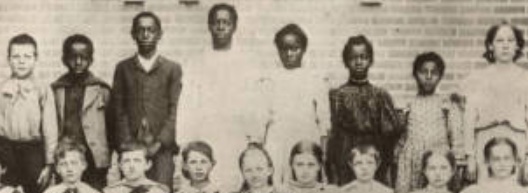
Carrie Hammons, the youngest child of William and Delphia Hammons, can be seen this 1896 Irvington School photograph. Top row: L to R: Bill Judkins, Levi Brock, Dady Compton, Unknown, Cora Rehm, Pansy Brock, Carrie Hammons, Tillie Whistler (Cropped from a much larger photograph belonging to the Irvington Historical Society)

     Rufus Hammons (1862-1945), the oldest son of William and Delphey Hammons, lived all but ten years of his life on Good Avenue in Irvington. At the age of 34 years old in 1896, he made history when he became the first African-American to run for political office from the neighborhood. In the mid to late 1890s, a group of Irvington men tried to purge "party politics" from the town offices. Irvington had not yet been annexed by the city of Indianapolis so the community still elected trustee, clerk, and marshal positions. Not everyone in the neighborhood went along with the plan including many in the Republican Party. Mr. Hammons won the nomination to serve as the Republican candidate for Town Marshal against Samuel Smith, who aligned with the non-party faction. In the late 1890s, the Republican party was still known as the party of Lincoln and most African-American men in the nation supported Republicans on the ballot. For Rufus Hammons it must have been an incredible milestone in his life as he had been born into slavery. 

     When the votes were counted, Samuel Smith soundly defeated Rufus Hammons 178 to 90. Even though Mr. Hammons lost the election, numerous white people in the community still voted for him. He made history on that day. He went on to remain active in organizations throughout his life. He was a leader in the Frederick Douglas Lodge No. 7 of the Knights of Pythias. The black-owned Indianapolis Recorder noted meetings and celebrations held at his Good Avenue home. On August 20, 1903, he hosted a lawn fete complete with a brass band. Admission to the event was free. He and his wife, Susie, raised their children in Irvington and attended the nearby First Baptist Church. His father and mother lived next door at 240 Good Avenue for many years. He earned his living working at the Layman & Carey Hardware Store. Some of his children went on to remain actively involved in Irvington as well. 

     In 1929 and the age of 57, Rufus Hammons told the journalist Elizabeth Carlyle, as he stood next to his bicycle, "I can turn a summersault backwards today." He had been a gifted athlete and acrobat in his younger days. He even auditioned for the P.T. Barnum Circus as a young man. When she inquired why he preferred riding his bike he told her, "I've walked, rode stage coaches, mule cars, dummies, battery storage cars, trollies and automobiles, but people are traveling too fast today to suit me."  He lived until he was 82 years and died at his home on Good Avenue in 1945. 

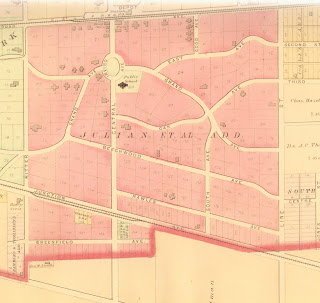
A Baist map shows Good Avenue north of Dewey Avenue and south of Bonna Avenue in 1908. You will note that the First Baptist Church had not yet built their new structure on the block yet. That happened in 1910. (IUPUI Digital Collections) 


Willliam and Delphia Hammons lived at 240 Good Avenue shown above. Next door, Rufus and Susie Hammons resided at 234 Good Avenue. (demolished) Other descendants also lived on the block. They attended church across the street at First Baptist. (photo Google Streetview, July 2011) 


     I wish to thank James Robinson, Anne Hardwick, and Steve Barnett for their help with this post. We would love to know more about this talented family. If you are a descendant, drop me an email at williamfranklingulde@gmail.com. 

Sources:  William Hammons--Grace Julian Clarke, "Geometrical Flower Beds of Olden Times Recalled," Indianapolis Star, November 1, 1925, 65; 1880 Federal Census; William and Rufus Hammons--Elizabeth Carlyle, "Son of Slaves, Resident Here 57 Years, Still Good Acrobat," Indianapolis Star, June 21, 1929, 72; Rufus Hammons--Election of 1896-"At Irvington," Indianapolis Journal, May 5, 1896, 8; Knights of Pythias--"Notice," Indianapolis Recorder, August 15, 1903; Obituary--"Hammons Burial Friday," Indianapolis News, January 14, 1945, 34.


Monday, March 7, 2022

Milroy Family Moved to Irvington

      For the first twenty-five years of their marriage, Russell and Leona Harton resided in the village of Milroy in southern Rush County. They also raised their two children, James (Jim) and Marilyn there. Mr. Harton worked for the highway department. During World War II, International Harvester, a factory located on Brookville Road in Indianapolis, desperately needed workers as many young men were off fighting in the war. The plant likely paid much better than the Rush County Highway Department where Mr. Harton had been employed. While he likely started working at the factory in 1943, the family did not permanently relocate to Indianapolis until three years later. 

     On March 23, 1946, the middle-aged couple and their seventeen-year-old daughter Marilyn moved to a double at 132 Good Avenue in Irvington. Their son James was away at Indiana University, but came home and stayed with them whenever he was on break. Mr. Harton now had a very easy commute to the factory. He also lived near other neighbors who worked at International Harvester.  Ralph Law, who resided on the other side of the double at 130 Good Avenue worked at the plant as did James Lowery, who dwelled across the street in a double at 123 Good Avenue. 

     Most of the homes along the 100 block of Good Avenue were built between 1921 and 1925. By 1947, only one couple, Edwin F.  and Sarah M. Lay still remained from the 1920s. There was a housing shortage in the United States and in Indianapolis following World War II so the Hartons might have received a tip about the available double from either Ralph Law or James Lowery. It would not have been a quiet street as the Pennsylvania Rail line, a double track, was only one house away. Just across the tracks at 203 Good Avenue, the Hartons could view the Bruckman Ice and Fuel Company from their front porch. It had a coal yard. Their new life in Indianapolis would be very different from the old one in Milroy. They didn't stay in the small duplex for long however as the Hartons soon rented a nineteenth-century cottage located at 220 South Ritter Avenue in 1948. 


Ralph Law (left) chatted with his new neighbor and co-worker, Russell Harton.  Mr. Law and his wife, Mildred lived at 130 Good Avenue in 1946. Behind the men, you can see the bungalows located at 109 (far left), 115 and 117 Good Avenue. The Moorman, Green, and Agnew families resided in those homes in 1946. (photo courtesy of Tom Harton)

The Harton family moved from Milroy, Indiana to 132 Good Avenue on March 23, 1946. Russell Harton worked for International Harvester. Behind him, you can see the bungalow at 117 Good Avenue (left) and part of the double located at 123-25 Good Avenue. (photo courtesy of Tom Harton)

Marilyn Harton of 132 Good Avenue stood near the family automobile in 1946. The seventeen-year-old youth transferred from Milroy High School to Howe High School during her junior year and graduated from Howe in 1947. Behind her, you can see the Agnew home located 117 Good Avenue. 

James (Jim) Harton stood on the front porch of his family's new home at the double located at 130-32 Good Avenue in March of 1946. He was away at Indiana University when his parents made the decision to move from Milroy, Indiana to Irvington. (photo courtesy of Tom Harton)

Shortly after the Hartons moved to Good Avenue, their cousins, the Foysts of New Castle, Indiana came for a visit in 1946. The most visible home in the photo is 117 Good Avenue. Pictured; Joe Foyst, Jim Harton, Marilyn Harton, Mary Ann Foyst, and Martha Lee Foyst (photo courtesy of Tom Harton)

Marilyn Harton of 132 Good Avenue chats with Maria Keller, whose family lived at 136 Good Avenue in May of 1946. Mickey, the Harton family dog, was still getting used to his new home in Irvington as he started life in Milroy, Indiana. Behind the young women, you can see part of 117 Good Avenue and most of the double located at 123-125 Good Avenue. (photo courtesy of Tom Harton)

Butch, the Harton family cat, examines his new home at 132 Good Avenue in Irvington in 1946. The Hartons of Milroy, Indiana had recently moved into the double and brought their pets with them. (photo courtesy of Tom Harton)

     I wish to thank Tom Harton and Marilyn Clarkson for both the photos and stories about the Hartons. I also wish to thank Anne Hardwick. 

Irvington Historical Society

Sources: Good Avenue families:  Polk's Indianapolis City Directories for 1924 and 1947; Move from Milroy to Irvington--Harton family e-mails and "Milroy," Rushville Republican, March 26, 1946; The Rushville Republican documented many events in the lives of the Harton and Thomas families. 

Friday, November 27, 2020

Irvington at 150: Street Names E-H

Irvington street names have a complicated history. Many of the avenues have been called by numerous names. In this second part of the series, you will note that some of the meandering paths in the neighborhood were named after local farm families, famous American writers, and investors. We do not know the origin of all of the names, but thanks to the hard work of a local historian, Larry Muncie, we do have precise dates for their naming. Feel free to contact us if you have more information!

Edmondson Avenue: Little is known about the origin of this street. It first appears in the Indianapolis City Directory in 1928. When Warren Park incorporated in the late 1920s, Edmondson Avenue became an eastern boundary for that neighborhood. More research is needed on this street.

Ellenberger Parkway:  In the mid-1920s, city officials began construction on Ellenberger Parkway; however, they did not pave nor link it with Tenth Street, which upset a few local residents. (Indianapolis Star, May 19. 1925) With the availability of federal funds during the Great Depression and working with the WPA, the parkway was completed by the mid-1930s. (Indianapolis Star, December 20, 1935, 18) The avenue was named for the prominent Ellenberger family who also sold the land for the nearby park. 

Members of the Ellenberger family gathered for a reunion at the family home at 5602 East 10th Street in 1914. Both a park and a nearby street are named for the Ellenbergers. 

Elizabeth Street: Although the name of the street is unknown at this time, we do know that many of the homes built along that stretch were developed by the Vogel Company in Wagner's Addition in 1941. The investors invited the public to tour twelve new residences on September 7, 1941. Two months later, the United States entered World War II.

Indianapolis Star, September 7, 1941, 31


Emerson Avenue:
Now a busy thoroughfare, Emerson Avenue began as a quiet street called National Avenue until 1898. The Irvington Town Board changed the name to Emerson after the essayist Ralph Waldo Emerson (1802-1882). Mr. Emerson would have likely been pleased that two of his good friends, George Bancroft and Nathaniel Hawthorne, also had streets named for them in the new college town, but he died before the renaming. 

Ralph Waldo Emerson (1802-1882) never knew that the little town of Irvington named a street for him. (public domain)

English Avenue: On September 1, 1873, city officials approved the contract to improve the first half mile of a new street in Irvington called "English" Avenue. The street was named after William Hayden English (1822-1896), a prominent banker and politician in Indianapolis. (Indianapolis News, September 2, 1873, 2) 

William Hayden English, a capitalist and politician, built an opera house and hotel on Monument Circle in Indianapolis. (public domain) 


Farrington Avenue:
After World War II, developers scrambled to build houses for the returning veterans who were starting their families. With assistance from the FHA and the GI Bill, families could apply for loans and purchase brand new two or three-bedroom residences along Farrington Avenue in the late 1940s and early 1950s. E. G. Bauer & Son built many of the houses along the new street. 

Fletcher Avenue: While Fletcher Avenue is most often associated with a near south side Indianapolis neighborhood, the street has a short stretch through southwestern Irvington. The street is named after Calvin Fletcher, an early resident of Indianapolis who went on to become a banker, farmer, and a politician. 

Calvin Fletcher (1796-1866) was an early leader in Indianapolis. His multi-volume diary captured life in the young capital and was later published by the Indiana Historical Society (public domain)


Good Avenue:
Walter and Ada Good joined Jacob Julian, Sylvester Johnson, and Lycurgus Rawles in platting most of southern Irvington in January of 1873. As a thank you for his investment, a small street north of Dewey (then East) and south of Bonna (then Railroad) was named Good Avenue. Later in 1903, the city of Indianapolis renamed South Street in between University Avenue and Rawles as Good Avenue as well. 


Graham Avenue: While it is unconfirmed at this moment, it is believed that Graham Avenue was named for William Henry Harrison Graham, a local resident and investor. Mr. Graham and his wife Ellen built a beautiful home on University Avenue. In 1897, he became the American consul at Winnipeg, Canada. He also went into business with Charles Brouse, who helped to develop several sections of Irvington. His widow, Ellen Graham, entered the history books when she sold their beautiful home to D.C. Stephenson, the Grand Dragon of the KKK in Indiana and the Midwest. 

Grand Avenue: The street used to be longer as it stretched from Audubon Road to Brookville Road, but the town board realized that it was a confusing route so the section from Audubon Road to Ritter Avenue was changed to Burgess Avenue. Only a small section of the street remains today. The name appears to be generic. 

Greenfield Avenue: Perhaps when Jacob Julian and Sylvester Johnson named a small stretch as Greenfield Avenue, they had hoped that one day the path might connect to the nearby Hancock County city. Both men were from Centerville, Indiana and would have passed through Greenfield along the National Road on their way to and from Irvington. Greenfield Avenue, however, never managed to make it out Irvington. 

Hawthorne Lane: In 1898, the Irvington Town Board chose to name both Commercial and Blount Streets after Nathaniel Hawthorne, the popular writer. Mr. Hawthorne died before the founding of the town, but his works like Scarlet Letter and Twice Told Tales would have rested on many bookshelves throughout the neighborhood. 

Nathaniel Hawthorne (1804-1864) was much admired by many in Irvington.


Hibben Avenue:
In December of 1913, the Irvington Improvement Association announced the exciting news that lots on a new street called Hibben Avenue would now be for sale. (Indianapolis Star, December 4, 1913, 4) The small street stretched from Downey to Ritter Avenue. The Association named the street for the wealthy Hibben family who dwelled in a villa at 5433 University Avenue. Thomas Hibben earned his fortune in the wholesale trade. His children were equally as talented. Paxton Hibben, a brilliant student, went on to become an author and a diplomat. Thomas Hibben, Jr. was an architect who designed buildings on Butler's Fairview campus while James Hibben taught chemistry at Princeton University. His daughter, Helene Hibben, was a prominent sculptor who opened an early kindergarten where the children spoke French. Her sister Hazen assisted her. The house where they lived on University was the previous home to the Downey and Thompson families; thus, three street names came from one house: Downey, Bonna, and Hibben. 

Courtesy of Hibben family descendants via Ancestry.com

Courtesy of the Hibben family descendants via Ancestry.com

Courtesy of Hibben family descendants via Ancestry.com 


Hill Street:
It appears that the small street located in Ritter's Lowell Subdivision was laid out in 1911. Curbs and sidewalks were not added until 1913. (Indianapolis Star, October 4, 1913, 3) Since there is a slight hill on the avenue, it appears that the name is geographical in nature. 

Howe Drive: Named for the nearby high school and a former president of Butler University, the narrow street has served as a conduit for thousands of teenagers over the decades. The residents of Irvington had long wanted a high school so when they finally received one in 1938 they decided to name it after Thomas Carr Howe (1867-1934). Mr. Howe served Butler University as a professor, dean, and as president. His untimely death, after being struck by an auto, shocked the community. 

Thomas Carr Howe, a former president of Butler University (public domain) 


Sources: Larry Muncie, Three Windows on Irvington History, 1989; "Changes in Street Names," Indianapolis Journal, January 18, 1903, 3; "Irvington's New Names," Indianapolis News, November 3, 1898, 7; "Would Change Names of 149 Streets in City," Indianapolis News, December 18, 1916, 8; Interviews with Steve Barnett and Larry Muncie, 2020. 

Thursday, May 8, 2014

At the Intersection of Dewey and Good Avenues

Ora and Mildred Heithecker of Brazil, Indiana rented half a double at 5843 Dewey Avenue in the late 1930s and early 1940s.  Mr. Heithecker worked as an equipment inspector for the state of Indiana.  The couple paid $35 a month in rent.  Their two young children, Janis and Harold, enjoyed playing and riding their bikes along Dewey and Good Avenues. While the world seemed to be falling into chaos and war, the US was still at peace and warm summer days provided endless fun for the youth of Irvington.  In the top photo, the children were carefully posed next to the family home in 1939. They were dressed up so perhaps it was for a special event.  In the bottom photo, Janis Heithecker enjoyed a bike ride along Dewey.  The photographer not only captured a beautiful image of her, but behind her you can see Good Avenue.  Contemporary images show the same views in 2014.

Heithecker children in front of 5843 Dewey Avenue

5843-45 Dewey Avenue in 2014

A car pulls off of Good Avenue onto Dewey Avenue behind Janis Heithecker in 1940.

The intersection of Dewey and Good Avenues in 2014
The historic images are courtesy of the Heithecker descendants via Ancestry.com.  

Saturday, September 15, 2012

Image of First Baptist Church--c. 1938

This modest stuccoed church has been along Good Avenue since 1910.  Begun in 1887, congregants for the First Baptist Church used to meet in a small structure on the north side of University Avenue east of the Irving Circle Park.  They moved to their current structure in 1910 although the building as has been altered over the years.


Irvington's African-American population dwelled throughout the neighborhood.  Many members of the church lived away from the community and drove in for services.  In this historic image, taken around 1938, church members gathered for a photo.  The young women and ladies are all wearing dresses while the men are in ties.  I am sorry to report that I don't know many of the names in the photo, but this wonderful image is courtesy of the Krystal Wagner Family Tree page from Ancestry.com.  Gertrude Higgenbotham, who dwelled at 136 South Sheridan Avenue, joined the church in 1935 and is in this photo.  Her mother joined in 1921.  The Reverend R.H. Noel served as the minister.


The contemporary image shows the structure at 231 Good Avenue on a quiet Saturday morning in the waning days of the summer of 2012.

Tuesday, April 10, 2012

Spring along Good Avenue--1950s


Peonies emerged on a beautiful spring day sometime in the 1950s on the side lot of 211 Good Avenue. On this site in 1890, used to stand the small McVey cottage. It burned in 1913 so the McVeys just expanded the yard so that they had a double lot for their second home next door at 211. By the 1950s, the Geren family lived on the property. In this photo, you can see the early twentieth century garage and the rear of two homes that face Berry Avenue. You can also see the Pennsylvania Railroad if you look closely. I also distinctly see two yard flamingos! This historic image is courtesy of Lori Malander and the Irvington Historical Society.

Monday, April 9, 2012

Candid Shots of the Gerens of Good Avenue


The Gerens dwelled at 211 Good Avenue from the 1920s to the late 1950s. Harry Geren (1882-1958) was a mechanic and worked with the Indianapolis Railways for years at the Traction Terminal Building in downtown Indianapolis. His house was only two city lots away from the Pennsylvania Railroad. Ruby Pearl Geren (1882-1958) stayed home and raised their children. The 1930 Census reveals that Harriet (age 12) and Robert (age 9) lived in the house with their parents. The census also reveals that the home was worth $2500 in 1930.

In the top photo, several generations of Gerens gather at 211 Good Avenue for a snapshot, likely taken in 1947. In the second photo, Harry Geren poses on the north side of the home in his snazzy suit! There is no date on the photo, but it was likely taken in the 1940s. In the third photo, the Geren women can be seen standing near the north side of the house in 1948. Behind them, you can see various outbuildings on the double lot.

You may learn more about this house by clicking on the "Good Avenue" link below. These historic images are courtesy of Lori Malander and the Irvington Historical Society.

Saturday, April 7, 2012

The Gerens of Good Avenue


William McVey built 211 Good Avenue in 1901. Upon his passing in 1922, the McVeys eventually moved away. The next family to dwell in the cottage were Harry M. and Ruby Pearl Geren. Both of the Gerens were born in 1882 and both died in 1958. For over thirty years, the Gerens lived in and raised their children in the Good Avenue house. Much like the McVeys, they left some of their photos with the home. The photos depict happy family reunions and smiling grandchildren. The pictures also represent much about life in mid-century Indianapolis.

In today's photo, taken sometime in the 1940s, the Gerens are seen working in their kitchen. It appears that someone has broken a few dishes so there is likely a story to go along with this photo. Notice that Mrs. Geren is washing bowls. The water still runs in the sink behind her. The kitchen has clearly been updated as the cabinets look new for that time period. More will be forthcoming on this longtime Irvington family. This historic image is courtesy of Lori Malander and the Irvington Historical Society.

By joining the Irvington Historical Society, you will help to preserve wonderful photos like this. Go to irvingtonhistorical.org.