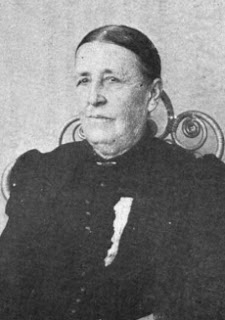
Wednesday, December 20, 2023

New York Street Home Then and Now


       Sometime in the mid-1940s, a member of the Shimer family snapped an image of Edna Webster Shimer as she walked up to her home at 5815 East New York Street. The Shimers were active members of the nearby Irvington Methodist Church, so it is possible that she was coming home from a service. Behind her in the photograph, you can see the bungalow located across the street at 5814 East New York Street. Robert and Celestine Ratz Glassmeyer along with their three children, Robert Jr., Joanie, and Richard resided in that home. The Glassmeyers had lived in the house since the late 1920s. Amazingly, their residence looks much the same today as it did nearly 80 years ago when Mrs. Shimer came home on a winter or early spring day. 

Edna Webster Shimer walks up to her home at 5815 East New York Street c1945. Behind her, you can see the Glassmeyer bungalow at 5814 East New York Street. (photo courtesy of Chris Shimer)

The bungalow located at 5814 East New York Street looks much as did in the late 1920s when the Glassmeyers moved into the house. (photo snapped December, 2023)

     I wish to thank Chris Shimer and Therese Glassmeyer for their help with this post. 

Monday, December 11, 2023

Shimer Family Purchased New York Street Bungalow

      Thomas and Edna Webster Shimer bought their relatively new bungalow at 5815 East New York Street in 1930. They were not the first family to reside in the home. Werner and Irene Monninger and their young daughter, Gloria, lived in the house from 1926 until 1930. Mr. Monninger, a World War One veteran, taught at Arsenal Technical High School while Mrs. Monninger studied art at the Herron Art School. She later made a name for herself painting portraits. In 1930 they moved south of Irvington to 2160 South Ritter Avenue.

     Thomas Sylvester Shimer and Edna Webster Shimer had been married for nearly nine years when they purchased their forever home on New York Street in Irvington. Their son, Thomas, Jr., was only four years old when they moved in. Photos from their early years in the home show the young boy playing outside and celebrating Christmas. 

     Mr. Shimer worked as a safety engineer with his father-in-law, Dana Webster, at the Aetna Insurance Company. The job provided stability for the family as he remained with the company for 43 years. As a World War One veteran, he joined the local American Legion Post No. 38 and occasionally served as an officer. Mrs. Shimer stayed home and raised their son. Newspaper articles reveal that she served on the PTA for School #57 and that she hosted the Mother Study Club. She also had some musical talent and that seems to have passed to her son, Thomas Jr. He later became a jazz lover and played the saxophone for most of his life. 

     The Shimers were members of the Irvington Methodist Church so they could easily walk to Sunday services. Thomas Shimer, Jr. graduated from Arsenal Technical High School in 1944 and received a scholarship to study at the University of Cincinnati although World War II briefly affected those plans. In 1951, the Shimers walked down to the Methodist Church to witness the marriage of their only son to Carol Thompson. Later, they also proudly watched as he became an architect. In fact, he designed numerous hospitals in the state of Indiana including some of the wings for Community Hospital East. 

     Thomas Shimer retired from Aetna Insurance in 1962. In 1967, he died in the hospital designed by his son, Community East. He was 69 years old. Mrs. Shimer continued to live in the bungalow for many more years; however, due to her age she had to move into a nursing home run by the Methodists in Franklin, Indiana. She passed away in 2000 at the age of 100 years old. Thomas Shimer, Jr. passed away in 2012 at the age of 86. 

Edna Webster Shimer and Thomas Shimer, Sr. posed in their living room at 5815 East New York Street with their son Thomas, Jr. sometime in the early 1930s. (photo courtesy of Chris Shimer)

Thomas Shimer, Jr. posed next to the family Christmas tree c1930 at 5815 East New York Street. Under the tree that morning appears to be a miniature Christmas village scene. As an adult, Thomas Shimer, Jr. had his own architectural firm in the city of Indianapolis. (photo courtesy of Chris Shimer) 

Mila Murphy Shimer posed with her daughter-in-law, Edna Webster Shimer, and her grandson, Thomas Shimer, Jr, c1930 in the front yard of 5815 East New York Street. The home most visible in the photo is 5819 East New York Street. The Cheney family lived in that house at the time of the photo. (photo courtesy of Chris Shimer)

Thomas Shimer, Jr. posed along the sidewalk at 5815 East New York Street c1930 after a snowfall in Irvington. (photo courtesy of Chris Shimer)

For much of the twentieth century, the Shimer family resided at 5815 East New York Street. (photo snapped on December 8, 2023)

          I wish to thank Chris Shimer and Sheri Piland for their help with this post.  

Sources:  Irene Monninger--Lucille Morehouse, "Portrait is of Interest to Art and Theater," Indianapolis Star, August 5, 1945; "Irene Monninger Liked Art, Music," Indianapolis News, June 13, 1964, 6; Werner Monninger--"Former Teacher Dies in Florida," Indianapolis Star, May 19, 1961; Thomas Shimer, Sr--"Thomas Shimer Dies, Retired Safety Engineer," Indianapolis Star, January 16, 1967, 33; Edna Webster Shimer--online obituary, 2000; "Mother Study Club," Indianapolis Star, November 14, 1937, 50; Thomas Shimer, Jr. --online obituary, 2012; Scholarship--Indianapolis Star, June 27, 1944; "Carol Anne Thompson, T.S. Shimer, Jr. To Wed," Indianapolis Star, December 17, 1950; Community Hospital--Indianapolis Star, May 31, 1964, 2; 1930 Federal Census; Polk's City Directory for Indianapolis.

Wednesday, December 6, 2023

Family Hosted Wedding in Bosart Avenue Home


A Beautiful Day for a Wedding--Saturday, April 2, 1921

     Residents near the intersection of North Bosart Avenue and East New York Street likely noticed many cars parked along the nearby streets. By 3:00 PM, the sun was out and the temperature neared 60 degrees. It was a perfect day to host a wedding in Irvington. If the neighbors opened their windows at that hour they would have heard Elizabeth Engle's rendition of the bridal chorus on the Webster family piano at 131 North Bosart Avenue. Miss Engle took piano lessons from Edna Webster and it was time for her most important recital thus far. 

The Websters Move to Irvington

     Dana and Annie Dicks Webster first moved to Indianapolis from New England in 1906. Mr. Webster had been hired by the Aetna Insurance Company as a safety engineer. They first lived on North Central Avenue, but by 1916 the Webster family, including daughters Arline and Edna, moved into their newly-built home at 131 North Bosart Avenue. Today, we know this area of Irvington as the Bosart-Brown neighborhood. Mr. Webster's name appeared in newspapers all over the state of Indiana as he was in high demand as a guest speaker about worker safety. Mrs. Webster stayed home to raise their two daughters. She was an outstanding seamstress and during the war years she knitted for the Red Cross and later for Goodwill industries. Both Arline and Edna graduated from Arsenal Technical High School and Arline attended Purdue University. Later, long after both girls had moved out and married, Mr. Webster became upset by the tax increases upon his Bosart Avenue property and in 1938 he led a successful petition drive to lower the tax rate in the city. On this day, however, his mind was focused on his daughter, Edna and her soon-to-be husband, Thomas Shimer. 

Annie Dicks Webster wore a "Harding blue" dress on the day of her daughter's wedding in 1921. Both Mr. and Mrs. Webster, who were in their mid-forties, posed along their sidewalk at 131 North Bosart Avenue. Behind the couple, you can see the home of Agnes Haddow at 133 North Bosart Avenue and in the distance you can see the Morrow home at 4702 East York Street. (photo courtesy of Chris Shimer)

The Shimer Family Pre-dates the Founding of Irvington

     Edna Webster had been born in Connecticut, but her fiance, Thomas Shimer, had been born into a family who had lived in the area since the early nineteenth century. The Shimers owned farms along Brookville Road for decades. By 1921, they had sold off much of the land and lived in various houses along South Emerson Avenue. Nelson Shimer, the father of Thomas, was ten years old when founders, Jacob Julian and Sylvester Johnson, began buying land north of the Shimer farm for a planned community named Irvington. In his lifetime, he watched as developers and contractors built houses and commercial structures on former meadows and woodland. By 1921, Nelson had retired from farming as he was 61 years old. Mila Murphy Shimer had been busy on the farm as she helped raise nine children. For many decades the couple resided at 422 South Emerson Avenue so their commute to the Webster home would have been a short one.  


Nelson Shimer was 61 on the day of his son's wedding, while Mila was 59. They lived nearby on South Emerson Avenue. In this photo, they stood along the sidewalk belonging to the Webster family of 131 North Bosart Avenue. (photo courtesy of Chris Shimer)


Thomas Shimer and Edna Webster Marry

     With Miss Engle playing the piano, sixty guests crammed into the home attempted to watch as Edna Webster and Thomas Shimer took their vows in front of the fireplace at 131 North Bosart Avenue. The couple stood near lattice work buttressed by ferns. Greenery and flowers draped the nearby staircase and even from the hanging lights. Ralph Shimer, the groom's cousin, served as the best man while Arline Webster, Edna's older sister, served as the maid of honor. Both Thomas and Arline had graduated from Arsenal Technical School. Did they meet there? We do not know. Thomas served his country during World War One and had found work in the insurance industry upon his return. Following their honeymoon, the couple took up residence in the Spink-Arms Apartments at the southeast corner of East Washington Street and Downey Avenue. 

Thomas Shimer and Edna Webster married at her home at 131 North Bosart Avenue on April 2, 1921. The couple would eventually move into a bungalow at 5815 East New York Street in Irvington. (photo courtesy of Chris Shimer)

131 North Bosart Avenue along with 133 North Bosart and 4702 East New York Street on December 4, 2023. 102 years earlier, a wedding took place at this house. 

Sources:  I wish to thank Chris Shimer for his help with this post. About the actual day--"Wedding," Indianapolis News, April 2, 1921, 14; Mrs. Webster--"Annie Webster Dies at Hospital," Indianapolis News, July 26, 1957, 5; Mr. Webster and tax revolt--"Taxpayers Unite in Strong Demand for Heavy Slashes," Indianapolis News, August 31, 1938, 1. Federal Census Records for 1920; Polk's City Directory for 1916-1921. 

Thursday, November 30, 2023

Emerson Avenue Used to Have a Median Strip


     In the early twentieth century, local Irvington residents traveled on many brick streets including South Emerson Avenue. Additionally, this particular stretch of Emerson also had a median with grass and flowers separating the lanes. The homes most visible in the photograph below were 218 and 216-14 South Emerson Avenue. If the photographer had turned to the right, you would have seen Butler University. Students and professors who exited via the western side of campus would have viewed a beautiful street. Later, city officials removed the medians and paved over the brick as the street became a major thoroughfare. 

A grass and flower median used to separate the traffic lanes in the 200 block of South Emerson Avenue, c1910 (photo courtesy of Chris Shimer)

Google Streetview of the 200 block of South Emerson Avenue (August, 2019)


Monday, November 27, 2023

Pennsylvania Railroad Had a Double Track Through Marion County.


     Sometime around the year 1910, a member of the Shimer family crossed South Emerson Avenue and took a photograph of the double tracks at the Pennsylvania Railroad. If the photographer had turned ever so slightly to the right, you would have seen the campus of Butler University. The lighter colored home in the far left of the image is the rear of 152 South Spencer Avenue. The home next to the utility pole is 159 South Spencer Avenue. Both homes still stand in 2023. After the last rail company abandoned the tracks in the later part of the twentieth century, various people bought the land and constructed houses or expanded their yards near this section of the former line. Looking at this photograph, it is easy to see why some Butler professors complained about the noise of nearby trains in the middle of their lecture. 


Pennsylvania Railroad tracks at South Emerson Avenue in Irvington c1910 (photo courtesy of Chris Shimer)

Site of former Pennsylvania Railroad tracks as seen by Google Streetview in August of 2019. 


Monday, November 20, 2023

New York Street House Visible in Historic Photo

      Charles S. Townsend took out a building permit for 5821 East New York Street in 1910.  While Mr. Townsend may have been responsible for the construction of the house, the first person to reside in it was Abraham Shortridge, for whom both the high school and the road is named. That he was able to do so was quite amazing as the elderly man had been struck by a traction car near his farm east of Irvington in 1906 and lost part of a leg. After the accident, he convalesced at his son's home on Lowell Avenue. City directories indicate that the beloved educator lived in his new two-story home intermittently throughout the 1910s. 

The Coons Family

      George (known as Elmer) and Helen Schneider Coons likely moved into the New York Street home in 1918. It is unclear when they purchased the home, but a World War I draft card belonging to Mr. Coons lists him at the New York Street address. The card also noted that Mr. Coons was 38 years old and an unemployed laborer with a broken collar bone. Helen Coons came from a prominent German family in Hanover, Indiana. The couple had eight children so they likely needed a larger home. Don Rouse, the great grandson of Elmer and Helen Coons, had always heard that Elmer Coons had likely built the home. Mr. Coons was a Jack-of-all-trades and worked in a variety of jobs in construction and plumbing. 

     For the next four decades, the Coons family resided at 5821 East New York Street. Like any family, they celebrated many joyful moments and endured some tragedies. In 1923, the Indianapolis Times reported that Katherine Coons was part of a dance troupe known as the Indianapolis Follies. They performed at the Lyric Theater. One of their sons, Paul, helped to organize a bike race in Irvington in 1931 on the grounds of the former campus of Butler University. Several of their children married while living in the house. Shadows fell over the family after the death of two sons at a young age, and Mr. Coons died suddenly of a heart attack in 1926 at the plumbing business where he worked. He was only 47 years old leaving Mrs. Coons with the task of rearing their children and managing the house.

     Months after the death of Elmer Coons, an ad appeared in the Indianapolis Star that read, 3-room apt. for rent; furnished, sink, gas range, $6. In order to keep the home, Mrs. Coons turned the house into a duplex. She took out a building permit in 1929 so perhaps that is when she changed the porch and added a door onto the west side of the house. Numerous renters lived in the home throughout the twentieth century. She also covered the clapboard exterior with asphalt siding. A later owner clad the home in aluminum siding. After Mrs. Coons passed away in 1966, the family sold the property. 

     For the past several years, the home has been empty and work has started and stopped. Recently, building permits have appeared in the window so there is hope that the Shortridge-Coons home will see better days. 


Thomas Shimer, Jr., who lived at 5815 East New York Street, posed for this winter photograph c1931. Behind him, you can see 5821, 5823, 5825, and 5829 East New York Street. Besides the Coons family, the Timmons, Schaeffer, and Treat families resided in this block in the early 1930s. (photo courtesy of Chris Shimer)

A close up of the photograph taken in 1931 reveals the original front porch of 5821 East New York Street. (photo courtesy of Chris Shimer)

Helen Schneider Coons turned 5821 East New York Street into a duplex after the death of her husband in 1926. In this photograph, snapped in 1950, you can see that the home has been clad in asphalt siding and had a newer front porch. (photo courtesy of Don Rouse)

5821 East New York Street has been changed many times since 1910. Currently, the asphalt siding has been removed and building permits are in the window. (November, 2023)

The Coons family resided in 5821 East New York Street from 1918 until 1966. They posed for this photograph in 1920. Top Row: Anna, Ruth, Katherine, Elmer, Forest; Seated: Paul, Esther, Helen, and Carl. One son, Clarence, had already died. (photo courtesy of Don Rouse) 

     I wish to thank Don Rouse and Steve Barnett for their help with this post. It is possible that the house might have been moved onto the lot in 1910 as the architectural style reflects an earlier era. More research is needed. 

Sources:  Katherine Coons and the Indianapolis Follies--Indianapolis Times, June 7, 1; Paul Coons and the bike race--Indianapolis Star, September 4, 1931; Helen Coons--building permit--Indianapolis Star, August 29, 1929, 19; For rent ad--Indianapolis Star, September 26, 1926, 25; Polk's Indianapolis City Directories 1909-1966; Research by Steve Barnett at the Irvington Historical Society; Don Rouse, the great grandson of Elmer and Helen Coons. 

Saturday, August 26, 2023

Local Woman Operated a Library Near the White House

     The Anderson Cemetery sits along East Tenth Street north and east of Irvington. Many older families in eastern Marion County are buried there. Some of the tombstones date back to the 1850s. One of those interred under an unassuming tombstone is Lucy L. McClain Hunter. (1840-1888). For the past couple of years, my friend and fellow local historian, Anne Hardwick, and I have been uploading information about the people buried here onto Find-a-Grave. Anne meticulously makes connections and builds family trees on the site. Researching nineteenth-century rural women can be challenging. So, when I encountered Lucy Hunter I assumed that there would be little information about her. I could not have been more wrong. 

     I first searched for her obituary in the Indianapolis newspapers. Few nineteenth-century women in rural Marion County received much notice in local papers but I always start there. As I suspected, I found very little other than a funeral notice so I assumed that I had reached a dead end. Something told me to dig deeper. Was Lucy guiding me from beyond the grave? Amazingly, I did find her but not in Indianapolis. She turned up in Washington D.C. 
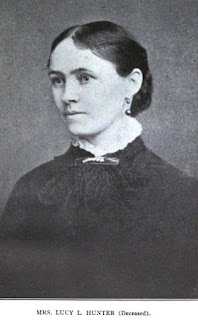
Portrait of Lucy McClain Hunter (Courtesy of Google Books: John Collins McClain, Sidelines of a Business Man or the Meanderings of a Sigma Chi, Salt Lake City, 1913)

The Hunters and the McClains

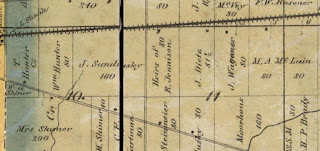
     Irish immigrant, John Hunter, and his Pennsylvania-born wife, Mary Thompson Hunter farmed land on what would later become Irvington. Based on an 1855 map, it appears that the Hunters lived in a house along the Brookville Road near what is today Emerson Avenue. The northern part of the property was just beyond the Pennsylvania Railroad and would have later incorporated Butler University's Irvington campus.The Shimers and Sanduskys were their neighbors. Mr. Hunter served the country during the Mexican-American War. Upon his death in 1850, the Hunter land was divided between two of his sons, Thomas and William. An 1855 map notes that the "Heirs of John Hunter" possessed the land at that time. Only a mile away lived the McClains. 

     According to an autobiography by John Collins McClain, William and Mary McClain moved into Warren Township in 1854. Mary McClain's father, Josiah Bettle, operated a farm near what is today Kitley Avenue south of Washington Street and north of Brookville Road. After her father's death in 1863, Mary McClain inherited the Bettle farm. The McClains had several children. Anne Hardwick's thorough research indicates that most of the children attended Asbury College (later DePauw University). Two of their sons, like their father, became attorneys. Even one of their daughters, Lucetta, attended the school but did not live long enough to graduate. But what of Lucy McClain, the subject of our story? 
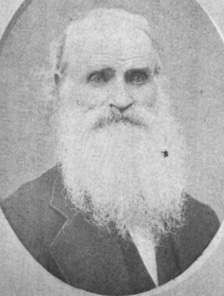
William A. McClain (1814-1881), the father of Lucy McClain Hunter, is buried in the Anderson Cemetery near Irvington. (photo courtesy of John Collins McClain)

Mary Ann Bettle McClain (1819-1889) was the beloved matriarch of the McClain family. Many of her children went on to impressive careers. She outlived many of her children, including her daughter, Lucy McClain Hunter. She is buried in the Anderson Cemetery.(photo courtesy of John Collins McClain)


An 1866 map of Marion County shows the farms of Thomas Hunter (far left) along Brookville Road and up into what would become Irvington and the McClain farm (right) just east of Irvington. (Library of Congress) 

Thomas Hunter and Lucy McClain Marry

     We do not know if Lucy attended Asbury College. We do know that she married Thomas Hunter in 1860 at the age of 19 and that they settled on the Hunter farm just a mile or so away from the McClain farm along Brookville Road. An 1866 map of Warren Township shows that Thomas Hunter inherited 80 acres and that his half-brother farmed an adjacent 80 acres. Four years later Jacob Julian and Sylvester Johnson purchased the nearby Jacob Sandusky farm and founded Irvington. The Hunters would also sell their land to future Irvington developers. But something seems to have soured between Thomas and Lucy Hunter. What happened? We do not know.

     Here is what we do know. By 1878, William and Mary McClain along with a son named Lorenzo "Dow" McClain, moved to Baltimore, Maryland. We also know that Lucy McClain Hunter went with them leaving her husband back in Indiana. In early 1878, Thomas Hunter tried to end his life in Richmond, Indiana. He was not successful and the local newspapers carried graphic descriptions of his suicide attempt. A few weeks later, he traveled to Jerseyville, Illinois on business as he was listed as a boot and saddle runner for a Boston company in the Indianapolis city directories. While in a hotel in that city, he killed himself. An Effingham, Illinois newspaper listed all of the letters in his possession at the time of his death including one to his wife, Mrs. L. Hunter in Baltimore, Maryland. Lucy's brother, Lorenzo made the sad trek to Illinois to retrieve Mr. Hunter's body for burial in the Anderson Cemetery north of Irvington.
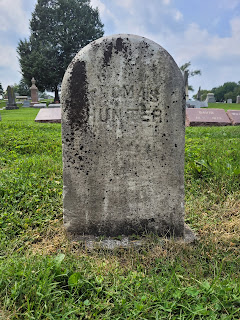
Thomas Hunter's simple tombstone in the Anderson Cemetery at 6501 East 10th Street. 

Lucy Hunter Opens Circulating Library in Baltimore

     Lucy McClain Hunter began to rebuild her life in the east. She opened a circulating library on Charles Street in Baltimore in the late 1870s. Circulating libraries predate the public institutions that arrived in the late nineteenth and early twentieth centuries. While some of these businesses catered to specific clientele, many provided the latest and most popular books of the time. One paid a monthly subscription and could "rent" a book or a periodical without having to buy it. These libraries specifically catered to the middle class and in particular to women. Often, the proprietors would also sell items that catered to female subscribers. Lucy Hunter sold stationery, album books, and greeting cards in her libraries. 

     She called her first library, the Baltimore Circulating Library and advertised profusely in the Baltimore newspapers. An ad in an 1881 edition of the Baltimore Sun on July 12, 1881, revealed that she offered "Delightful Summer Reading," complete with the latest novels, and "standard" literary magazines. Special summer rates were available. It is unclear where she obtained the money to start the venture, but she was highly successful. She did receive $1500 from a life-insurance policy from her deceased husband. It is possible that her parents might have also invested in the business, but we do not know. Two major events changed her life again. First, her father passed away in 1881. His body was transported back to the Anderson Cemetery. Secondly, a man named Enoch Pratt gave a million dollars to open Baltimore's first free-lending library in 1882. It looked like Lucy Hunter's era as a book lender was over. Why would residents of Baltimore lease books when they could obtain them for free? 

     But she wasn't finished and in fact, she would soon open a large lending library one block from the White House in Washington D.C.

Ad for the Baltimore Circulating Library (Baltimore Herald, July 12, 1881)

The Washington D.C. Circulating Library, 1882-1888

     In the summer of 1882, E.S. Wescott placed an ad in the Washington Evening Star about a building "for rent" at 1749 Pennsylvania Avenue NW for $75 a month. The ad promoted "a handsome store room," "French plate glass windows," and several rooms upstairs. A later ad touted a view of inaugural parades from the upper windows. Lucy Hunter must have seen the ad and leased the property in either late 1882 or early 1883. By the summer of that year, she placed ads daily in the Washington Evening Star for her newly-opened circulating library.

     Patrons of her shop had several options for payment. Subscribers could pay fifty cents a month or four dollars for the year. If a person wanted to check out two books at a time, then the rates went up to 75 cents a month or six dollars a year. Lucy offered over 3000 volumes. She eventually became so successful that she opened a branch at 1622 14th Street NW. Mark Twain, Robert Louis Stevenson, Jules Verne, Helen Hunt Jackson, and Mary Augusta Ward might have been some of the authors she carried. She likely partnered with publishing houses on obtaining the titles. Each January she sold off extra books. 

     So who patronized her libraries? It is tantalizing to imagine that because of her location so near the White House that some very powerful people might have subscribed. Senators? Wives of Senators? Representatives?  Cabinet secretaries? First Ladies? We simply just do not know. She arrived at the end of the Chester Arthur administration and could have watched all of the festivities for the newly-elected Grover Cleveland administration from her shop in March of 1885.  She soared with her new life in the nation's capital and then it all came crashing down.

In 1968, a  Washington D.C. artist, Kingsley Gibson, sketched 1749 Pennsylvania NW. Lucy McClain Hunter operated her circulating library here from 1882-1888. The building. located one block from the White House, has since been torn down. (DC History Center) 

Lucy Hunter's Conversion 

     Hundreds of miles away in Boston, Massachusetts Mary Baker Eddy chartered the very first Church of Christ of Science in 1879. Her theological tome outlining her philosophy had been growing in popularity. Could subscribers at the Washington Circulating Library lease this book from Lucy Hunter? In the spring of 1888, Lucy discovered that she had stomach cancer. An associate named "Miss Pollock" arrived to help to manage the library. She also introduced her to Christian Science. As her condition worsened, Miss Pollock contacted other nearby Christian Scientists to pray with Lucy. If newspaper accounts are to be believed, these new folks prevented Lucy's friends from seeing her. They even barred her mother, Mary McClain, from her bedroom because she tried to bring a doctor. Although there was little that could be done for patients with stomach cancer, there were some medical treatments that could have been administered to help with the pain; however, the Christian Scientists prevailed and Lucy Hunter died an "agonizing death." 

     The manner in which she died received national attention. Even a newspaper in Leavenworth, Kansas carried the story mainly because of the Christian Science "mania" taking root in the country. The Baltimore Herald editorialized,

     She was attended to by two faith curists from Baltimore, who doubtless prayed very fervently for her recovery, but the patient died in spite of their prayers. How long will it be before the law steps in to take hold of people who thus trifle with human life? 

Lucy Hunter Comes Home

     Mary McClain held an auction of her daughter's massive library and other inventory on June 15, 1888. Nearly 2500 books and periodicals along with stationary, jewelry, and furniture went up for bid. In her will, besides naming her mother as her executor and chief beneficiary, she left her surviving brothers each 20 dollars. Her niece, Clara Mitchell, received her watch and cameos while Lizzie Barnes received her wardrobe and bible. 

     Her mother and likely her brother Lorenzo, brought Lucy Hunter's body back for burial in the Anderson Cemetery near where she had spent her youth and early marriage. A funeral was held in the home of her uncle and aunt, George and Frances Hill, who lived near downtown Indianapolis on East Street. 

    In the span of her forty-seven years of life, Lucy McClain Hunter, had gone from a farm girl to a proprietor of one of the largest circulating libraries in Washington D.C. Her trajectory was remarkable. 
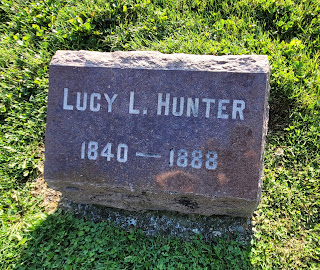
Lucy McClain Hunter is buried next to her husband and near her parents and siblings in the Anderson Cemetery. 

Epilogue 

     Lucy McClain Hunter's siblings, many of whom are buried in the Anderson Cemetery, also had remarkable stories. For instance, one brother, Charles Sumner McClain, participated in the rescue of the crew of the Greely expedition in the Arctic. Lorenzo Dow McClain resided in several cities, including Washington D.C., where he assisted Civil War veterans and their families obtain pensions. Another brother, John Collins McClain, who graduated high school with future President William Howard Taft in Cincinnati, became involved in the mining industry in both Alaska and Utah. His autobiography or musings can be read in the link below. 

Links

Sidelines of a Businessman by John C. McClain

McClain family

Sources:  McClain family information:  John Collins McClain, Sidelines of a Business Man or the Meanders of a Sigma Chi, (Salt Lake City), 1913;  Baltimore--City Directories and 1880 Federal Census; Washington D.C. Library--"For Rent," Ad, Evening Star, June 27, 1882, 2; Ad, Evening Star, November 3, 1883;  January sales--Ad, Evening Star, January 17, 1885; Ad, Evening Star, June 25, 1885; "Specials" (Ad), Evening Star, March 17, 1886, 6; "Stationery," Evening Star, March 31, 1886, 5; Number of volumes--Ad, Evening Star, May 15, 1886, 7;  "Books," (Ad), Evening Star, July 22, 1886, 4; Lucy Hunter's Will--Evening Star (District of Columbia), May 26, 1888,3; Auction of Library--Evening Star, November 24, 1888; Landlord and ad for 1749 Pennsylvania NW--Ad--Evening Star, December 18, 1888; For Rent--Ad, Evening Star, February 26, 1889, 2; Death notice--Indianapolis Journal, April 29, 1888; Articles about her death: Leavenworth Standard, May 7, 1888; Daily Times (Richmond, VA), May 8, 1888. Thomas Hunter's demise and death:  Fort Wayne Daily Gazette, January 11, 1878; Indianapolis News, January 11, 1878; The Effingham Democrat, February 7, 1878. Life Insurance--Indianapolis News, June 27, 1878.    


     I would like to thank Anne Hardwick for her collaboration on this post. I would also like to thank Steve Barnett and Deedee Davis.